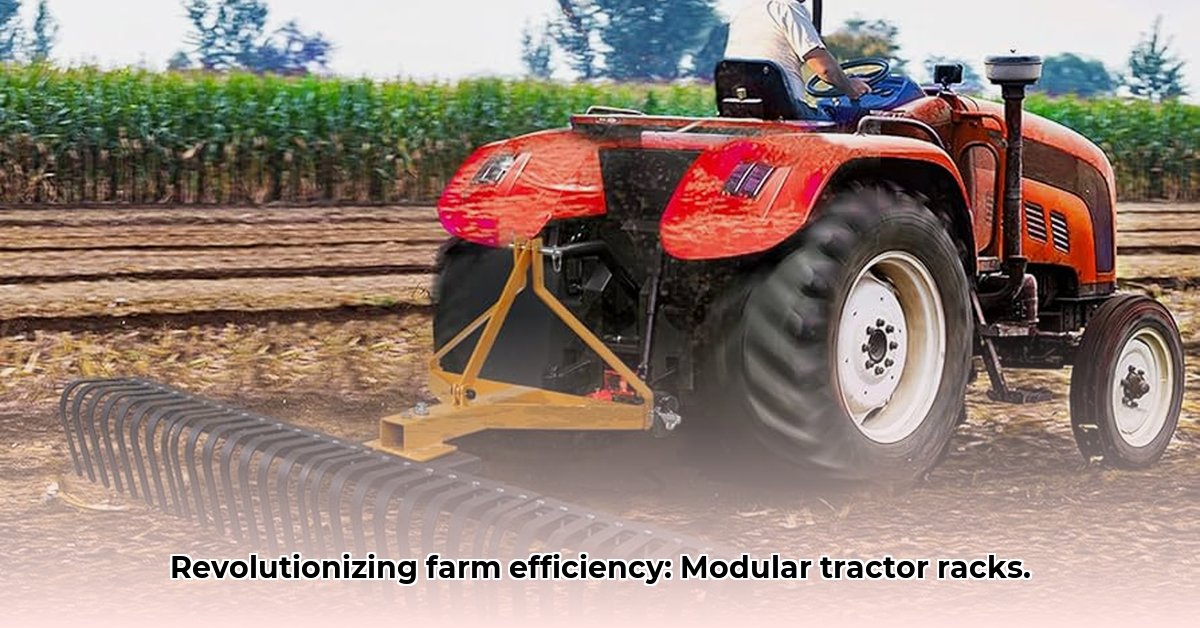
Modern farming demands increased efficiency and sustainability. Modular tractor attachments offer a powerful solution, transforming your tractor into a versatile tool for various tasks. This guide will equip you with the knowledge to select, use, and maintain these game-changing implements. For more resources on agricultural equipment, check out this helpful link.
Understanding Modular Tractor Attachments
Modular tractor attachments are interchangeable tools that easily connect to your tractor, replacing the need for numerous specialized machines. Think of them as "building blocks" for your tractor, allowing for quick adaptation to different tasks. This adaptability significantly boosts efficiency, reduces costs, and minimizes your environmental impact. The reduced need for specialized equipment translates to substantial savings in both purchase price and storage space. Several types of modular attachments exist, each designed for specific farming needs. Examples include the YardRack® (a general-purpose attachment ideal for moving and stacking numerous materials) and the Ratchet Rake (specialized for efficient land clearing or brush management). Visual aids – diagrams and illustrations – can better explain the connectivity and versatility of these systems.
Choosing the Right Attachment
Selecting the right modular attachment involves several key considerations. First, ensure compatibility with your tractor's weight capacity, hydraulics, and mounting points. Check manufacturer specifications carefully. Next, define your specific needs: What tasks will the attachment perform? Will it be used for land preparation, material handling, or harvesting? Defining your needs will guide you to the most suitable tools. Factor in budgetary constraints, comparing initial costs, maintenance expenses, and projected lifespan. Finally, consider maintenance requirements: Some attachments demand more regular cleaning, lubrication, or part replacements. This decision-making process should be tailored to your specific farm operations and capabilities.
| Factor | Considerations |
|---|---|
| Tractor Compatibility | Verify your tractor's specifications (weight limits, hydraulic capacity, mounting points) against the attachment's requirements. |
| Task Requirements | Identify the specific jobs (e.g., tilling, planting, harvesting, material handling) the attachment should accomplish. |
| Budget | Consider the initial investment, potential repair costs, and the expected lifespan of the attachment. |
| Maintenance | Research the ease of maintenance and the availability of parts. Regular upkeep ensures longevity and avoids costly downtime. |
A decision flowchart can further simplify the selection process.
Safe and Efficient Use of Your Tractor Rack System
Safety is paramount. Always meticulously follow the manufacturer's instructions for both the tractor and the chosen attachment. Begin with a thorough visual inspection of both the tractor and the attachment, checking for any damage or wear and tear before connecting any equipment. Ensure all locking mechanisms are securely engaged. Never exceed the weight limits specified by the manufacturer. Regular maintenance, including cleaning and lubricating moving parts, is critical for preventing malfunction or damage, reducing potential for accidents.
Step-by-Step Guide to Safe Attachment:
- Consult Manuals: Read and fully understand the operating instructions for both your tractor and the chosen attachment.
- Visual Inspection: Carefully inspect the attachment for any damage (cracks, bends, loose parts). Do not proceed if any damage is found.
- Precise Alignment: Align the attachment precisely with the tractor rack's mounting points. Ensure a secure and snug fit.
- Secure Locking Mechanisms: Engage all locking mechanisms firmly and double-check their security. A loose attachment is extremely dangerous.
- Test Run: Conduct a brief test run in a safe, open area to verify proper operation before undertaking any serious work.
Troubleshooting: Refer to your manual's troubleshooting section first. If problems persist, consult a qualified mechanic or contact the manufacturer for assistance.
Case Studies: Real-World Successes
Many farmers have successfully incorporated modular attachments into their operations. A small-scale farmer might use a YardRack® for efficient hay bale handling, then quickly switch to a tilling attachment for soil preparation. Larger operations might utilize a Ratchet Rake for land clearing, saving valuable time and labor. These examples highlight the versatility and efficiency gains achieved through the use of modular attachments.
The Future of Modular Tractor Racks
The field of modular tractor attachments is constantly evolving. Future innovations are predicted to include increased automation, enhanced integration between attachments and tractors, and the development of specialized tools tailored to sustainable agriculture. Expect advancements in precision farming technologies, with integration of GPS guidance and sensor-based automation. This will further enhance efficiency and minimize environmental impact.
In summary, modular tractor attachments are changing farm efficiency and sustainability dramatically. With careful planning, responsible usage, and routine maintenance, these tools offer substantial benefits that significantly outweigh the initial investment costs.
Tractor Rack
Content about tractor rack (Auto-generated fallback due to API error).
Tractor Rack
Content about tractor rack (Auto-generated fallback due to API error).